Lab Technician - Type 1 Diabetes (f/m/x)
 Part time
20 hrs./week
 Munich
At Helmholtz Munich, we develop groundbreaking solutions for a healthier society in a rapidly changing world. We believe that diverse perspectives drive innovation. Through strong partnerships, we accelerate the transfer of new ideas from the lab to real-life applications, improving lives.
The research focus of the Institute of Diabetes Research lays on understanding the pathogenesis of type 1 diabetes, on identifying mechanisms and predictive markers of the disease, and the translation of findings into clinical trials to prevent type 1 diabetes in humans. The institute is particularly interested in deciphering the molecular mechanisms of islet autoreactivity, and the interaction of environment, genes, and the immune response. The ultimate goal is to develop therapies for the prevention and cure of islet autoimmunity and diabetes.
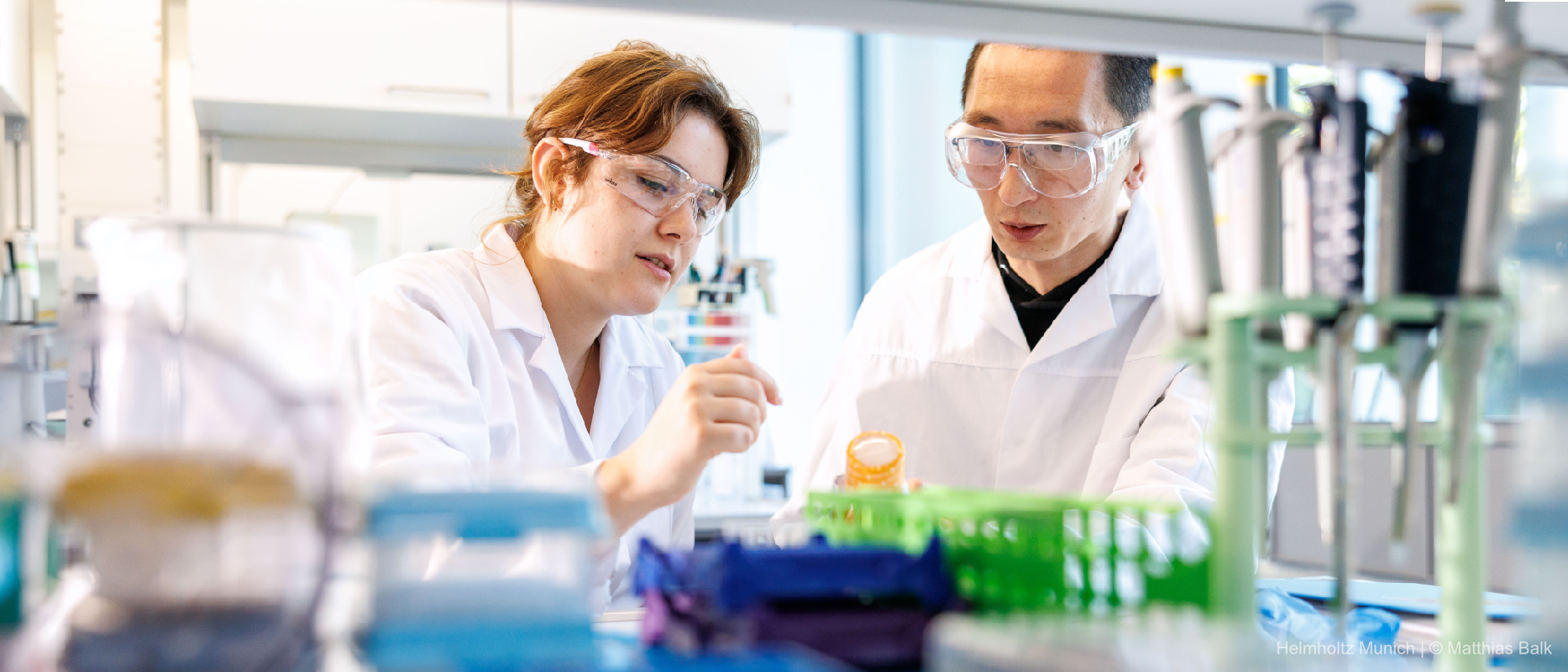
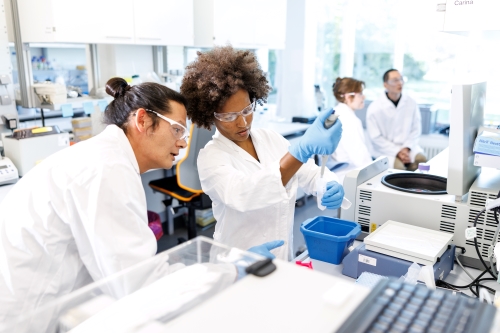
The laboratory of Dr. Teresa Rodriguez-Calvo within the Institute of Diabetes Research is seeking a Research Technician (f/m/x). We are looking for a highly motivated individual to help us investigate the pathogenesis of type 1 diabetes in humans. You will have the opportunity to work with human tissue material provided by the Network for Pancreatic Organ Donors with Diabetes (nPOD). In addition, you will help us to manage the daily tasks in the lab and work with colleagues on their research projects. You will be part of an international and diverse team formed by PhD students, postdocs and bachelor/master students.
Your tasks
- Receipt, documentation and storage of samples in accordance with established procedures.
- Maintenance of accurate sample records and associated donor information in laboratory databases.
- Performance of established immunofluorescence staining procedures.
- Careful documentation, organization, and initial quality control of laboratory data and experimental results.
- Operation, cleaning, routine maintenance, and function checks of laboratory instruments and equipment.
- Organization of day-to-day laboratory operations, including monitoring stocks of consumables, reagents, antibodies, and other laboratory materials.
- Timely ordering of laboratory supplies.
- Follow-up and storage of orders (delivered reagents, consumables, and laboratory materials).
- Support in preparing and maintaining standard operating procedures.
- Practical instruction of students and new team members in established laboratory procedures.
Your profile
- Successfully completed vocational training as a biological technical assistant (BTA), chemical technical assistant (CTA), medical technologist for laboratory analysis (MTL), medical technical laboratory assistant (MTLA), or a comparable laboratory qualification.
- Good organizational skills and willingness to take responsibility for laboratory inventories, routine orders, delivery checks, and associated documentation.
- Confident use of standard computer applications, particularly Microsoft Office.
- Ability to work independently within established workflows while collaborating closely with scientific and technical colleagues.
- Excellent written and verbal communication skills in English.
Desirable qualifications
- Experience in processing and documenting human donor samples or other biological specimens.
- Practical knowledge of established histological and pathology-related methods, particularly immunofluorescence.
If you fulfill all the requirements, you may be eligible for a salary grade of up to E 6. Social benefits are based on the Collective Wage Agreement for Public-Sector Employees (TVöD). The position has an (initial) fixed term of 6 months but may be extended under certain circumstances.
"Our work is focused on defining and characterizing the hallmarks of type 1 diabetes. We closely collaborate with the Network for Pancreatic Organ Donors with Diabetes (nPOD) to study the human pancreas from deceased donors at different stages of their disease. This has allowed us to discover novel pathological aspects, which have opened new lines of investigation that will shape our understanding of the natural history of type 1 diabetes."
Benefits
- Career Development: Postdoc program, scientific training & career center with tailored offers
- Scientific Resources: State-of-the-art infrastruture and Core Facilities
- Recreation: 30 days annual leave, flexi days, plus public holidays
- International Staff Service: Support with the relocation and integration process in Germany
- Health Promotion: Sports, company doctor, mental health initiatives

Interested in applying?
- CV
- Cover letter
We are committed to promoting a culture of diversity and welcome applications from talented people regardless of gender, cultural background, nationality, ethnicity, sexual identity, physical abilities, religion or age. In case of equal qualifications, preference will be given to applicants with severe disabilities.
Our commitment




Deutsches Forschungszentrum für Gesundheit und Umwelt (GmbH)
Institute of Diabetes Research Type 1
Heidemannstr. 1
80939 Munich